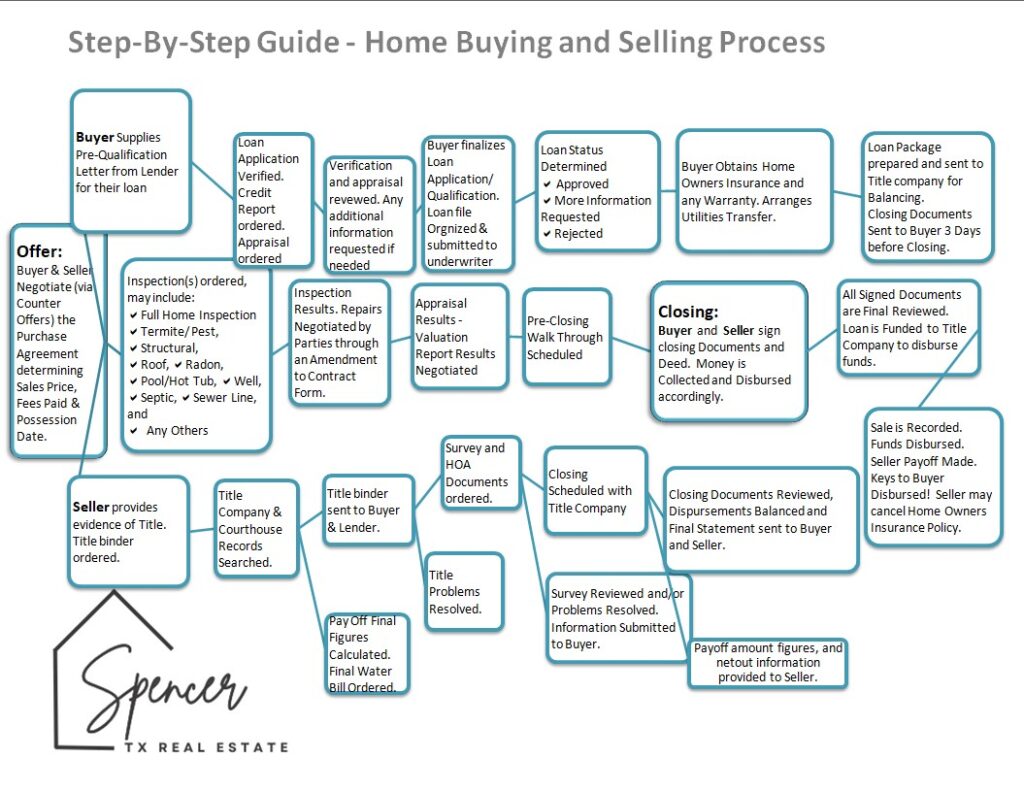
These are some of the more common Real Estate Terms & Definitions you will encounter during any real estate transaction.
Understanding them will help you better navigate the transaction and be better prepared with questions and/or strategies during the buying and selling process.
Offer
A buyer’s proposal to purchase a home under specific terms.
Counteroffer
A response to an offer that changes some of the terms.
Purchase Agreement
A Purchase Agreement is a legally binding contract outlining terms, conditions, and deadlines in a real estate sale.
Earnest Money
A deposit from the buyer showing serious intent to purchase. Applied toward closing costs or down payment.
Earnest Money Addendum
An agreement specifying how earnest money is handled if a contract is canceled.
Option-Period (A Texas Term)
A buyer-negotiated period allowing cancellation for any reason, usually after inspection.
Listing Agreement
A contract between a seller and a real estate agent that outlines the terms of representing the property.
Listing Price
The price at which a home is marketed for sale. See our Seller Pricing Strategies for best practices in this area.
Comparable Sales (Comps)
Recent nearby home sales used to determine accurate pricing.
Staging
Preparing and styling a home to appeal to buyers and increase perceived value. We offer a complementary Staging Consultation with our Seller Services.
Days on Market (DOM)
The number of days a home has been listed for sale. Lower DOM often indicates strong demand. Higher DOM indicate a Buyers Market.
Seller Concessions
Costs the seller agrees to pay to help the buyer, such as closing costs or repairs.
Pre-Approval
A lender’s written estimate of how much you can borrow. Stronger than pre-qualification and often required before making an offer. Learn more about getting a mortgage here.
Pre-Qualification
A quick estimate of what you might qualify for based on basic financial information. The Lender has not verified any of the information a Buyer may give them.
Down Payment
The cash you contribute upfront when buying a home, expressed as a percentage of the purchase price.
Contingency
A condition that must be met for the contract to move forward (e.g., financing, inspection, appraisal).
Appraisal
A professional estimate of a home’s value, required by lenders to confirm the property is worth the loan amount.
Inspection
A detailed evaluation of the home’s condition, identifying potential issues before completing the purchase.
Closing Costs
Fees paid at the end of a real estate transaction (loan fees, title insurance, taxes, etc.), typically 2–5% of the purchase price.
Escrow
A neutral third party that holds funds and documents until all conditions are met at closing.
Title
Legal ownership of a property.
Title Insurance
Protects buyers and lenders from future claims against ownership.
Deed
The legal document transferring property ownership from seller to buyer.
Lien
A legal claim against a property to secure payment of a debt.
Survey
A measurement of property boundaries and structures.
Lease Back
The Seller occupies the property for a period after closing.
Buyer’s Market
More homes for sale than buyers — gives buyers negotiating power.
Seller’s Market
Low inventory and high demand — gives sellers negotiating power.
Market Value
What a property is likely to sell for in the current market.
Equity
The difference between a home’s market value and the mortgage balance.
Months of Inventory
MOI, Represents the inventory available to Buyers moving into and out of the market now.
If no other inventory was added, listed or became available – How long it would take for all the inventory presently available to Sell at the current pace?
Anything above 4.5 Months is usually considered a Buyers Market and anything below 3 is considered a Sellers Market.
Final Walk-Through
One last time to view the property before Signing to Purchase it. Allowing the buyer to view the home to ensure it is still in the same condition it was when they made the offer. Occurs no sooner than 2 days before closing.